

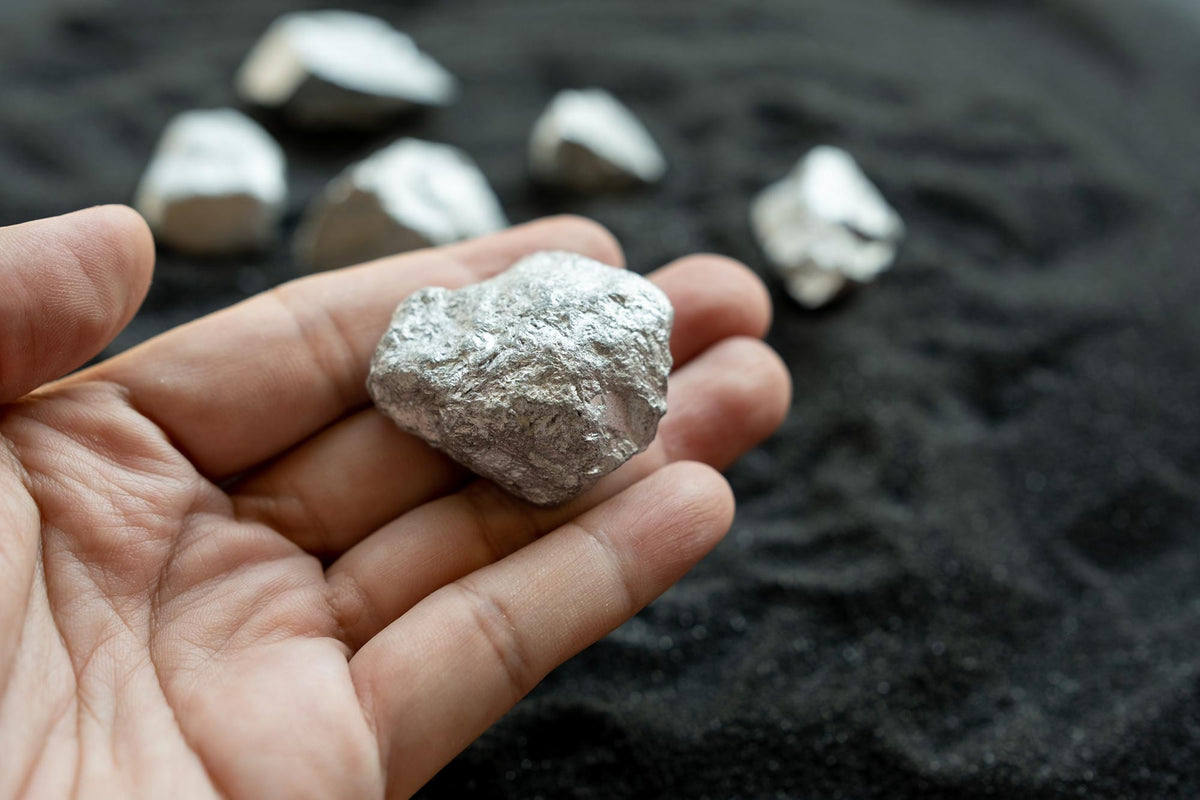
For most of history, no one had ever seen aluminum. Surprisingly, it’s the most common metal in the Earth's crust. It’s never found in its pure form in nature. It sits locked inside other minerals, and for thousands of years no furnace was hot enough, and no chemist knew how to purify it. When chemists in the 1800s finally learned how, a few beads at a time. In 1852, aluminum sold for around 1,200 dollars a kilogram. That was almost twice as expensive as gold.

So, naturally, it was treated like treasure. The story goes that Emperor Napoleon III of France served his most honored guests with aluminum cutlery, while the rest of the table was made with gold. And when America finished the Washington Monument in 1884, the tallest structure in the world, they capped its very tip with a nine-inch pyramid of aluminum.

Washington Monument Apex Aluminum Cap
Then, in 1886, two men solved the same problem in the same year without knowing one another. Charles Martin Hall, a 22-year-old working in a home laboratory in Ohio, and Paul Héroult, a 22-year-old in France, each discovered that electricity, run through the right molten mixture, pulled pure aluminum out. The price of the world's most precious metal fell 80 percent almost overnight, and it kept falling. By 1900, the metal of emperors cost less than a dollar a kilogram.
The two never met as young men, but their lives matched in a strange way. They were born in the same year, they made the same discovery in the same year, and they died in the same year too.

Charles Martin and Paul Héroult
Their discovery is why planes are affordable to build, why a can of soda costs pennies, and why the foil in your kitchen drawer is made of a metal that was once more valuable than gold.
Our products are machined from this material. The same metal an emperor saved for their finest guests now rests in your pocket.
Top Grain Leather
Whats the difference between Aluminum 6K & 7K?