

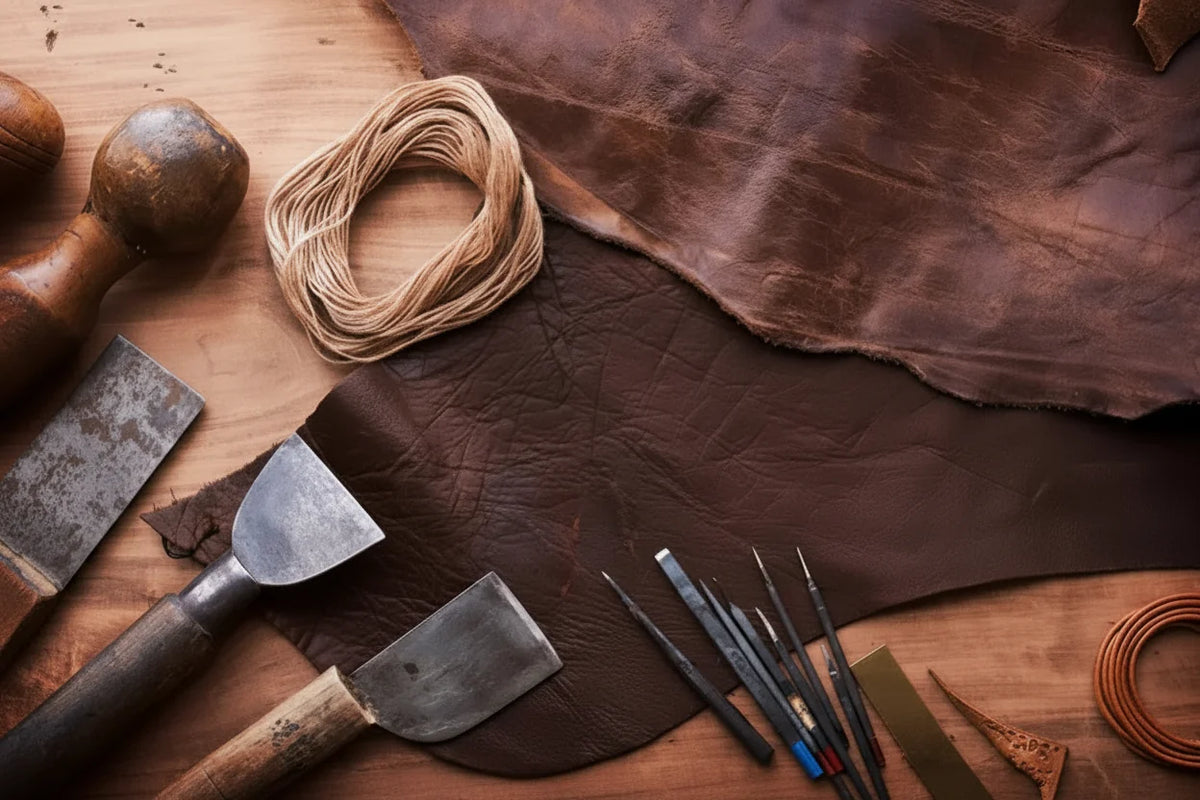
A raw cow hide is thick, around five millimeters thick. It gets split into thinner layers depending on its use.
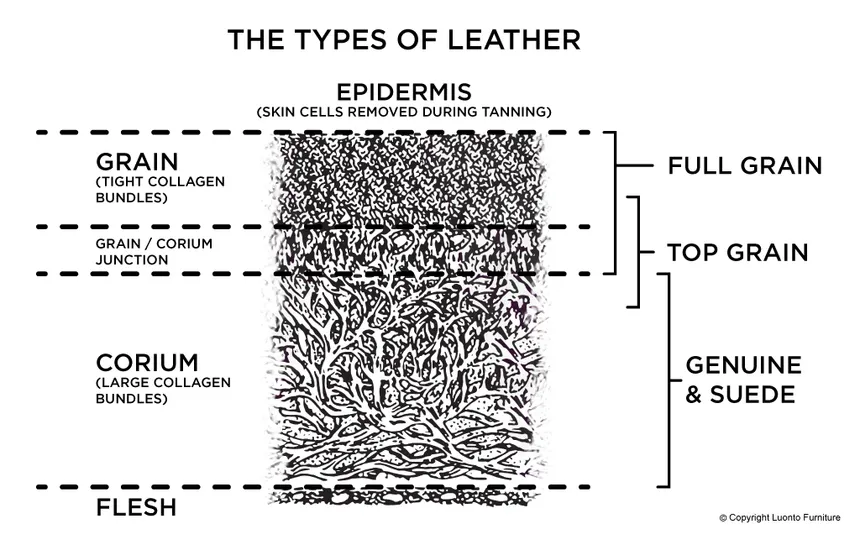
The top layer is where the animal's skin becomes exposed to the world: sun, rain, insects, and scratches. This causes the top layer to become tightly woven in every direction. Deeper into the hide, the fibers get looser and weaker. Those lower layers are what's usually sold as "genuine leather." Genuine leather is fine for a belt, which can be three or four millimeters thick.
The cover of our notebook had to be soft enough to feel like a book and tough enough to survive your pocket. The leather layer had to be thin, half a millimeter, about five sheets of paper in order for us to keep it thin enough to carry. It also had to work as a hinge, bending every time the cover opened and closed (which happens thousands of times in its life).
Cut the genuine leather down to half a millimeter, and it will tear like paper. Only the tight-woven top layer keeps its strength when it's shaved that thin. We call that layer the top grain.
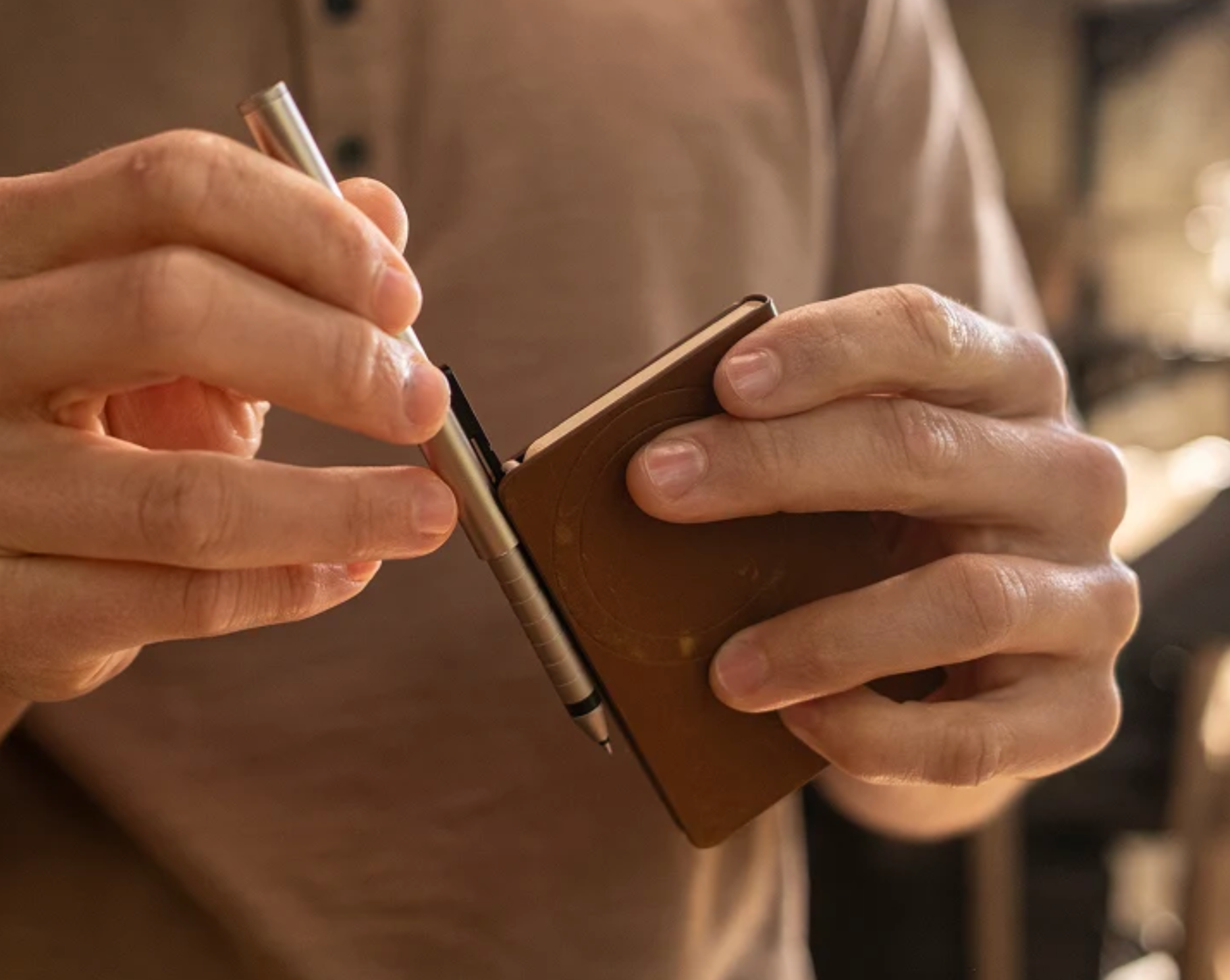
We chose top grain because it's the best part of the hide, but we had no other choice. Nothing else could be a cover, a hinge, and half a millimeter, all at once. You win, science.
Why Titanium Bonds With Bone: The Rabbit Accident
A Brief History of Aluminum